
Step into the role of a doctor in the afflicted town of Stagmarch, where an otherworldly illness is transforming residents into monsters. In this single-player, first-person experience, diagnose symptoms and make life-or-death decisions with limited resources. As days pass, witness the impact of your decisions on each patient—and the town itself. . .
How far will you go to save others?


Year
2024 - 2025
Role
Lead Designer, UI/UX & Spokesperson

Overview of Project
Triage was developed over 15 weeks as part of my Senior Capstone project, where I worked on a team of 10 members. The game was created using Unreal Engine 5 and with the primary goal of advancing through the Greenlight process—a competitive milestone within Champlain College's Game Studio, where 14 other teams were simultaneously developing their own games. After passing Greenlight, the team onboarded three new members and my role shifted to Lead Designer. After 12 weeks of development, Triage was eventually released on Steam and featured on PC Gamer’s “Five New Steam Games You Probably Missed (May 5, 2025)”.
Triage began with a question my team and I couldn’t ignore: how do you create a game that actually teaches the player through their decisions? One of my favorite philosophical thought experiments, the classic trolley problem, became our foundation. Do you save one life at the expense of others? What does that choice reveal about human nature? That ethical tension became the root of everything we built.
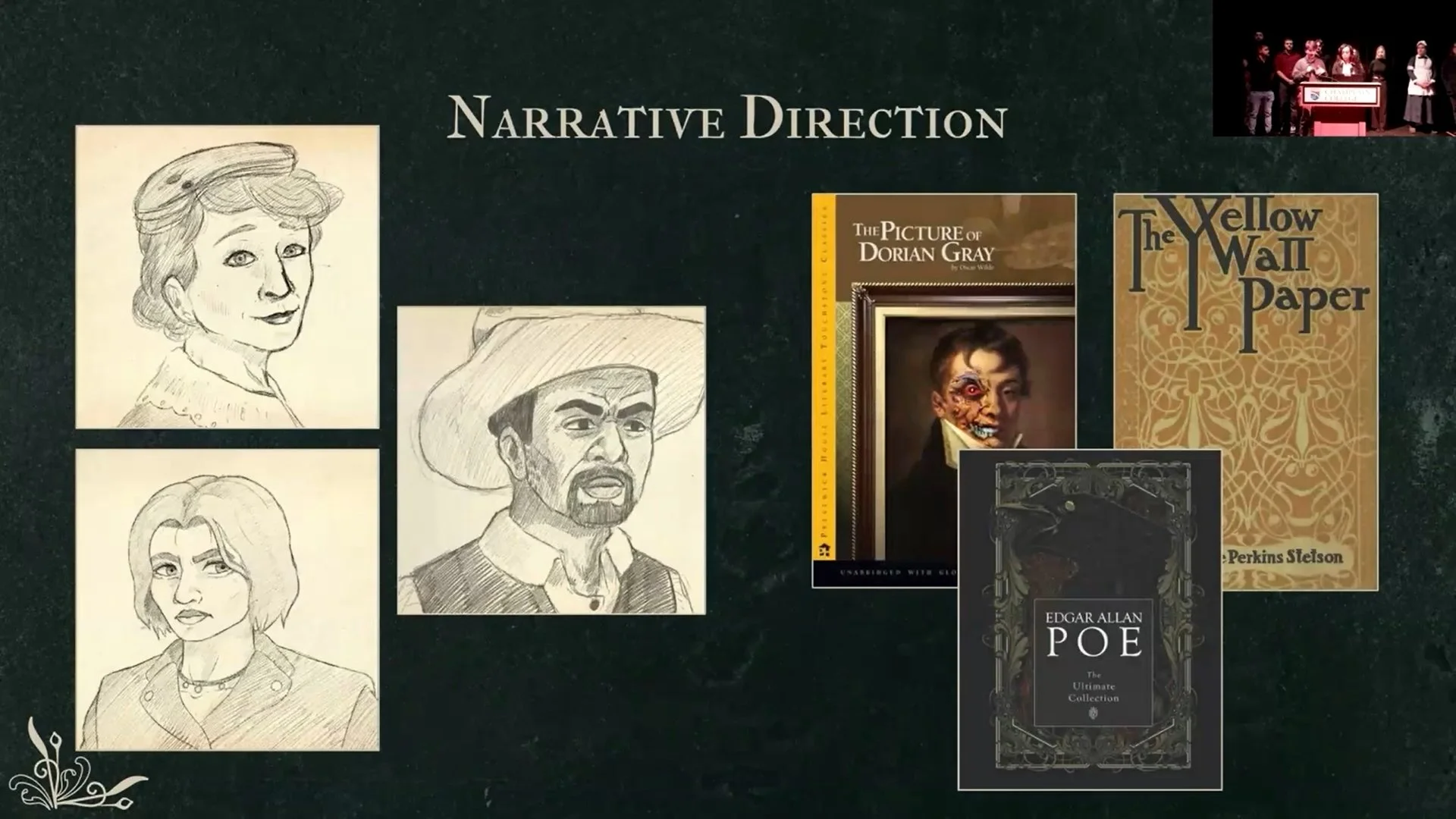
Once the core idea was in place, we shaped the game around three guiding pillars: presenting the player with an ethical dilemma, establishing a constant tone of unease, and creating an immersive narrative where the player feels embedded in the story rather than observing it from the outside.
Triage unfolds across a multi day system where the player speaks with patients, learns about their symptoms, and treats them using limited information. At the end of each day, the player must make the most difficult decision of all, choosing who will receive life saving treatment and who will not. From the very beginning, it was essential to reinforce one painful truth: not everyone can be saved. There is no perfect answer, only the weight of choice.
To embody this, we designed three central characters, each representing a different ethical dilemma. Choosing one meant sacrificing another. Across multiple playthroughs, these decisions branch outward, resulting in nine unique endings shaped entirely by the player’s values and convictions.
Main Mechanics
Design Challenges and Solutions
Crafting System Design: From 2D to Immersive 3D
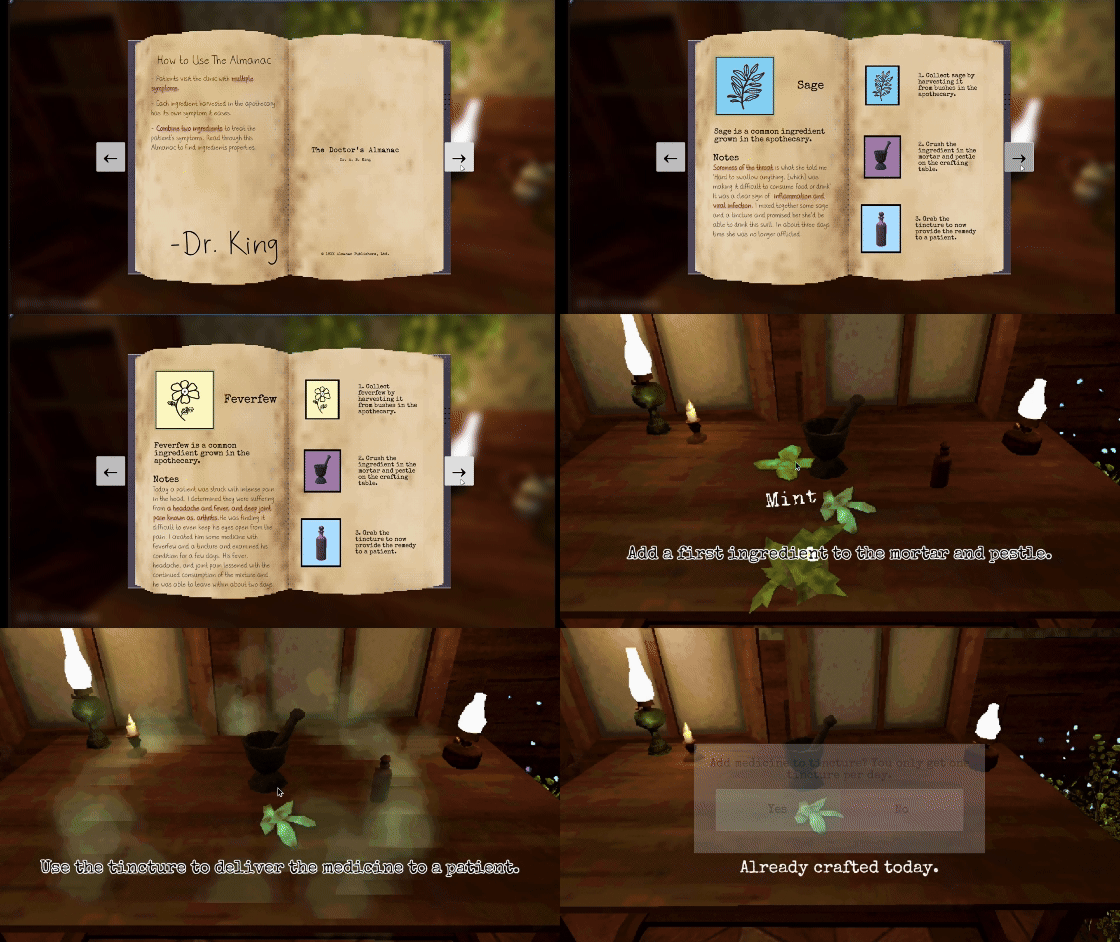
Crafting began as a 2D UI segment that required an inventory system to keep track of the ingredients the player would use. We later pivoted to 3D interactions to enhance immersion and make the transition to crafting feel less jarring for players as every other point in gameplay is 3D.
In the end, we created a fully functional crafting experience with pop-up text to inform the player about the crafting process. Highlighting the importance of using a tincture in the game was pivotal, so we added a UI confirmation pop-up to ensure players were intentional about their limited use of a tincture. Little details followed, such as enhancing visual clarity to ensure each herb looked distinctive, just as they would in real life.
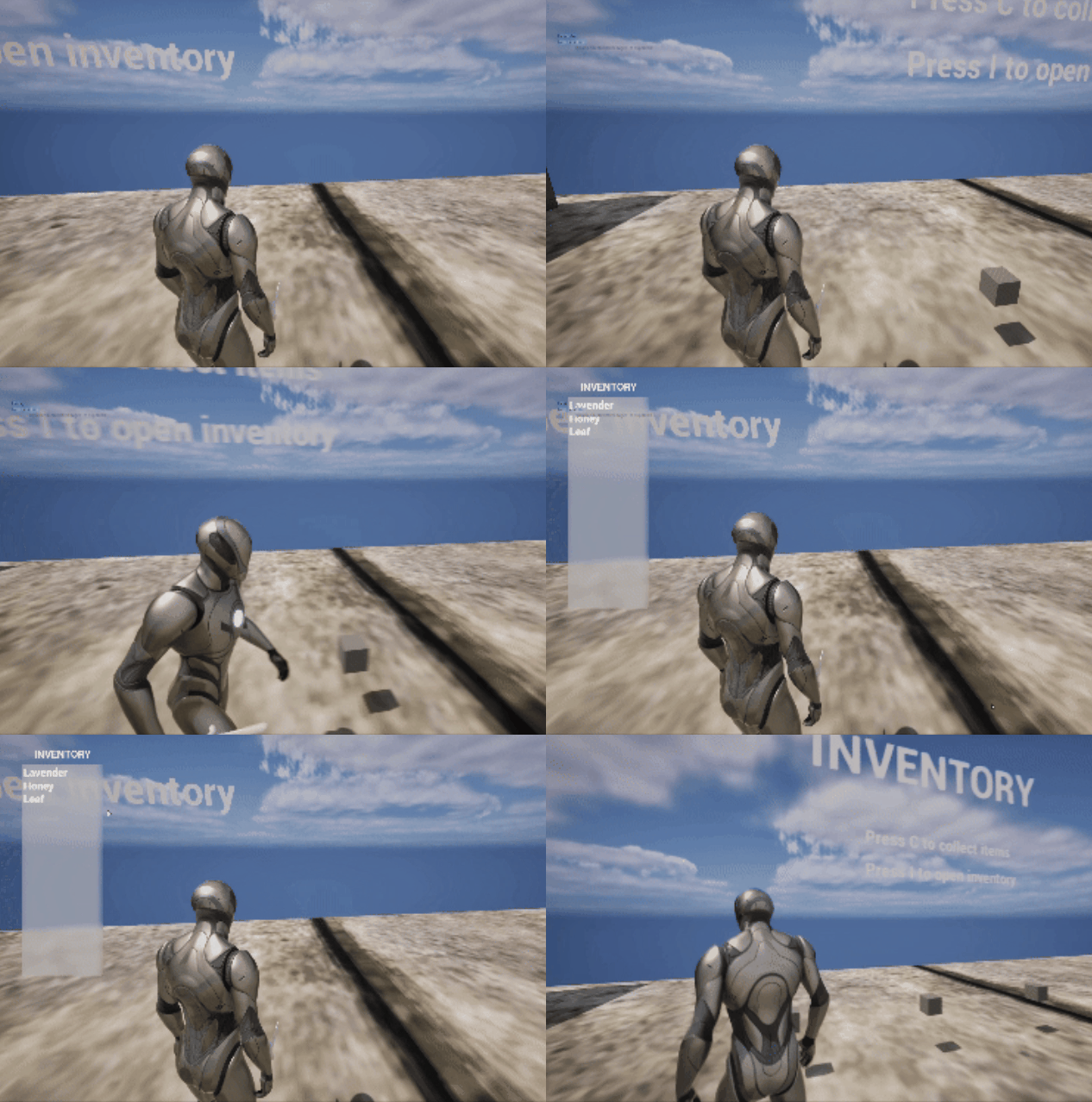
Prototype
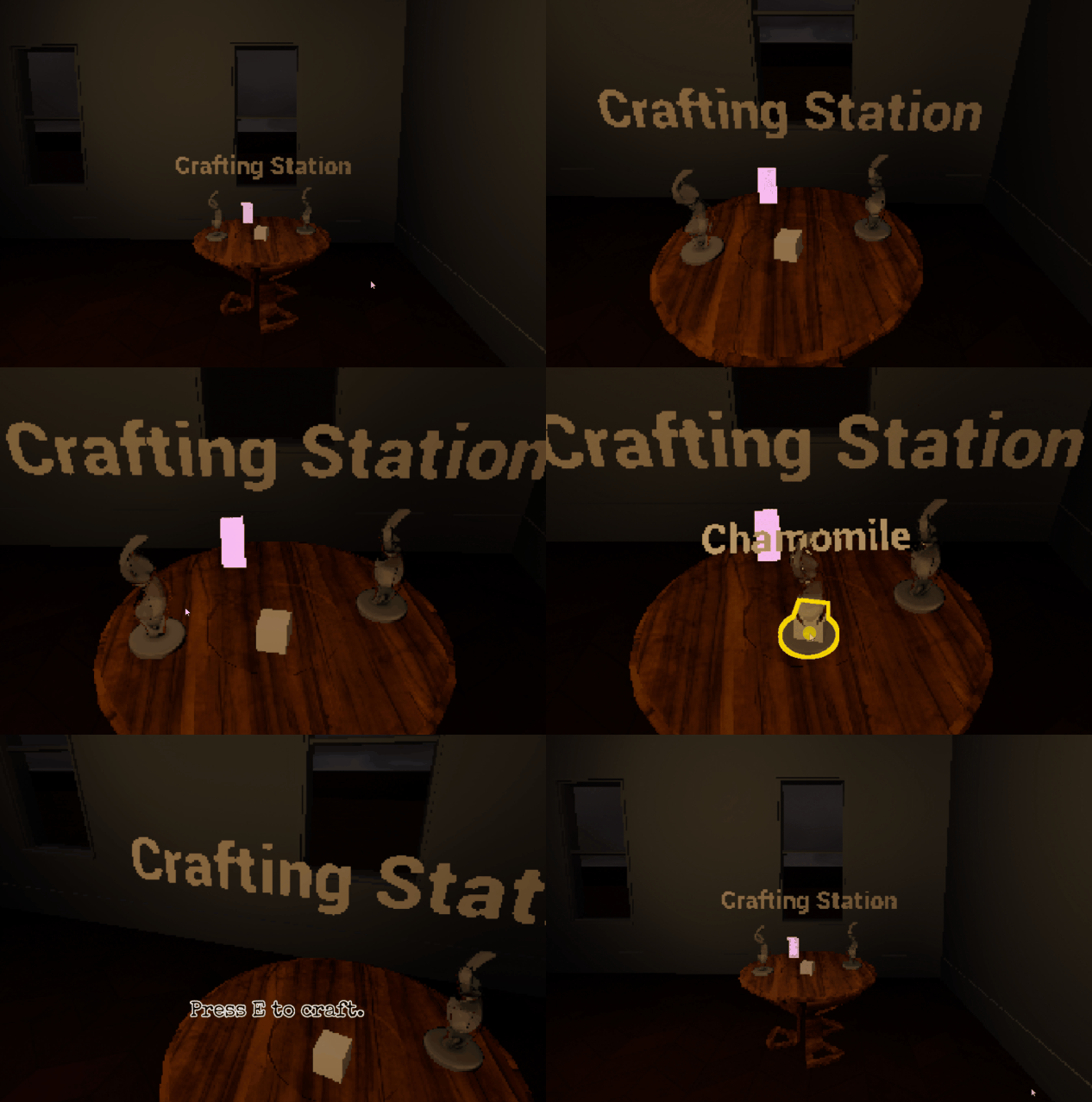
First Iteration
Greenlight
Final Version
Doctor’s Almanac
To clearly communicate how crafting connected to patient symptoms, we created the Doctor’s Almanac as the player’s primary tool for decision making and organization. After assessing a patient’s condition, the player turns to the Almanac to understand which resources are required for treatment. It functions as the bridge between diagnosis and action, ensuring that vital information is always accessible in the moment it is needed.
The initial UI design of the book was driven by the need to teach. For the purpose of Greenlight, clarity and readability were the highest priority, making sure all required information was visible and intuitive to new players. Once we passed Greenlight, we shifted focus toward aligning the UI more closely with the game’s narrative and visual identity. This led to a full UI overhaul that pushed the Almanac beyond a functional tool and into a narrative space.
Through iteration and close collaboration with our artist, the redesigned Almanac successfully unified the game’s 2D and 3D visual styles. Narrative elements were introduced on the right side of the book, reinforcing that the world the player inhabits existed long before they arrived. This added layers of history and depth, not only to the characters, but to the world itself.
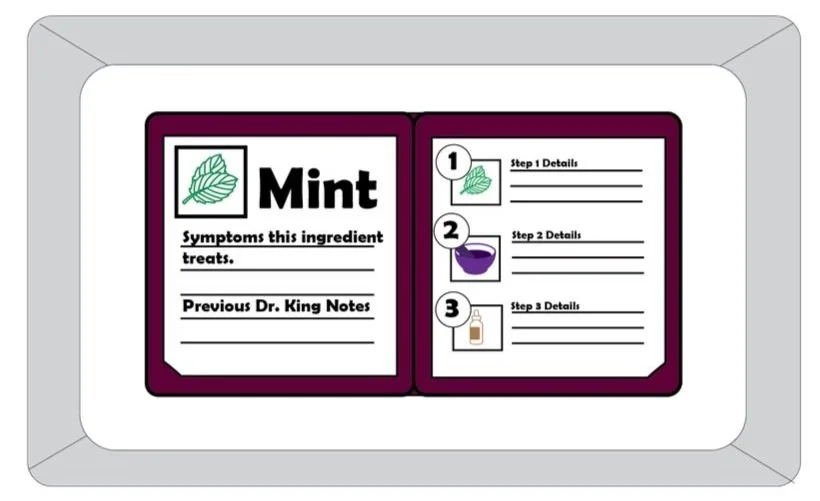
Initial Wireframe
Greenlight
Final Version
Clipboard
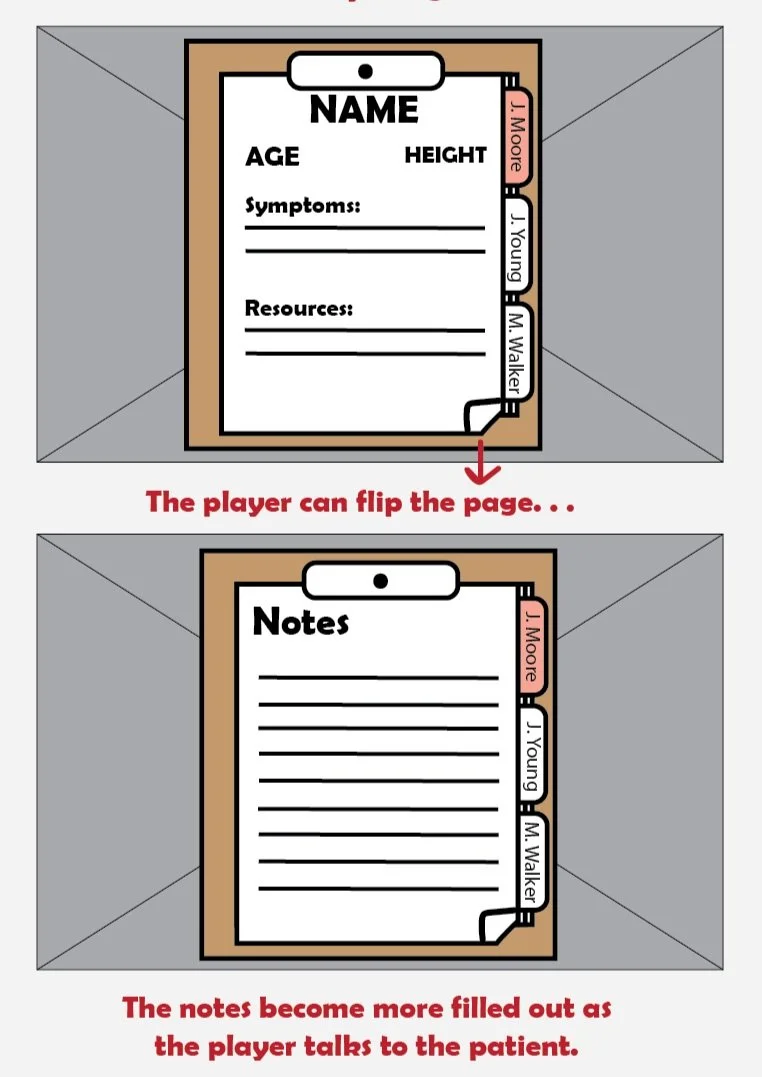
The clipboard was designed as the player’s way of observing and recording each patient’s condition throughout the diagnosis process. It communicates key details about symptoms while giving players a structured way to record and reference what they have learned. Before Greenlight, the main goal of the clipboard was clarity. It needed to clearly show players that patient information could be tracked in a reliable, readable way as they worked through each case.
After passing Greenlight, the focus shifted from function to feeling. The clipboard was redesigned to better match the game’s visual style, and more importantly, to deepen the player’s emotional connection to each character. Additional personal details were introduced to humanize the patients, reinforcing that these were not just cases to solve, but people whose lives were directly impacted by the player’s decisions.
Through iteration, we also recognized that the second page of the clipboard was redundant. The design was streamlined so that all essential information could live cleanly on a single page, paired with a portrait of each character for stronger visual clarity and immediacy. This change improved readability while strengthening the emotional weight behind every choice.
Initial Wireframe
Greenlight
Final Version
Narrative Decision Making
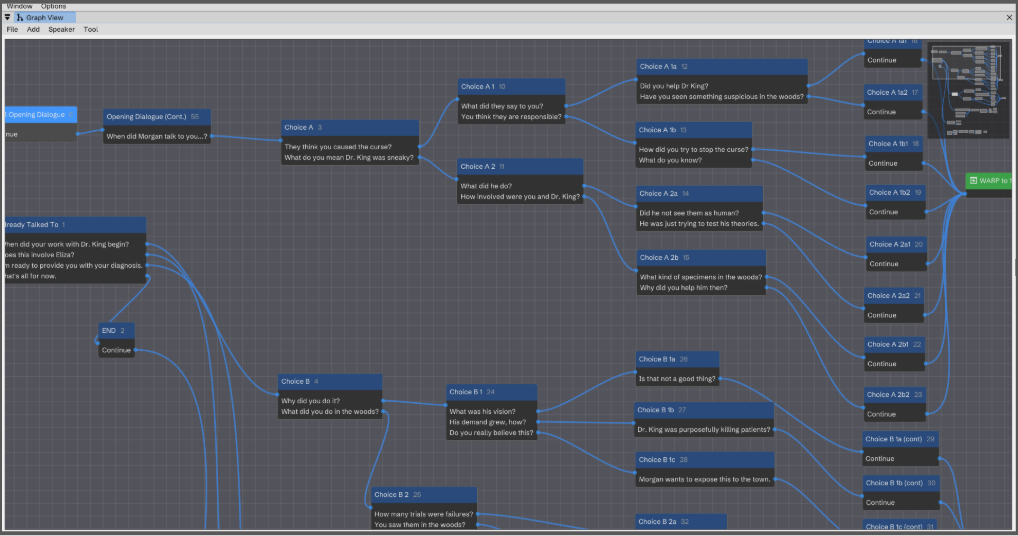
As the scope of Triage grew, so did the need for a system that could truly support meaningful player choice. Through close collaboration between engineers and narrative designers, a proprietary tool was developed called TNT, the Triage Narrative Tool. This became the backbone of our branching narrative system, allowing player decisions to ripple outward into vastly different outcomes. TNT gave us the freedom to fully connect choice, consequence, and storytelling in a way that felt intentional rather than scripted. It was this system that ultimately made the nine unique endings possible, reinforcing the game’s central ethical tension and ensuring that every decision the player made carried lasting weight.

Watch our Greenlight Pitch:
Watch our Senior Show Presentation:
Leadership
As Lead Designer, I acted as both a creative and organizational anchor for the team. I served as a spokesperson, alongside our Product Ownder,for the project while collaborating with Riot Games, representing our vision and progress externally. Internally, I oversaw the work of two narrative designers and two game designers, ensuring that we remained aligned in both creative direction and production goals.
I coordinated weekly Designer Discipline meetings to keep our objectives tied to the team’s sprint goals, and met regularly with other department leads to discuss progress, identify blockers, and delegate tasks strategically from the backlog.
My role required balancing creative leadership with logistical structure, making sure the team stayed motivated, focused, and supported.
Post Mortem.
Looking back on Triage, there are several things I would approach differently with more time and resources. One of the most important would have been creating a stronger transition between the tutorial and the first playable day. The most common feedback we received from Steam players was that the ending felt rushed, and as a student project, that limitation was very real. If given the opportunity to revisit the project, I would have prioritized the ending earlier in development to ensure it landed with the emotional impact the narrative deserved.
One of my strongest creative pushes during development was for the inclusion of stylized voice lines. I advocated for a Charlie Brown–style adult vocal approach, where characters communicate through expressive sounds rather than full dialogue. This would have preserved the aesthetic tone while avoiding the production challenges of traditional voice acting in a college environment. While it did not make it into the final build, it remains a design choice I strongly believe would have elevated the atmosphere of Triage.
Overall, Triage was the largest and longest project I have ever worked on, and carrying it through every major stage of development, from pre production to prototype, vertical slice, alpha, beta, and release, fundamentally changed how I understand what it means to ship a game. It taught me how to lead with intention, navigate real production timelines, perform under pressure, and release attachment to my own ideas when the health of the team and the integrity of the game mattered more. The lessons I learned on Triage will stay with me for the rest of my career, and I will continue to build on them in every project that follows.